

The Living Soil Advantage
How Biological Properties of Soil Drive Crop Health, Resilience and Yield
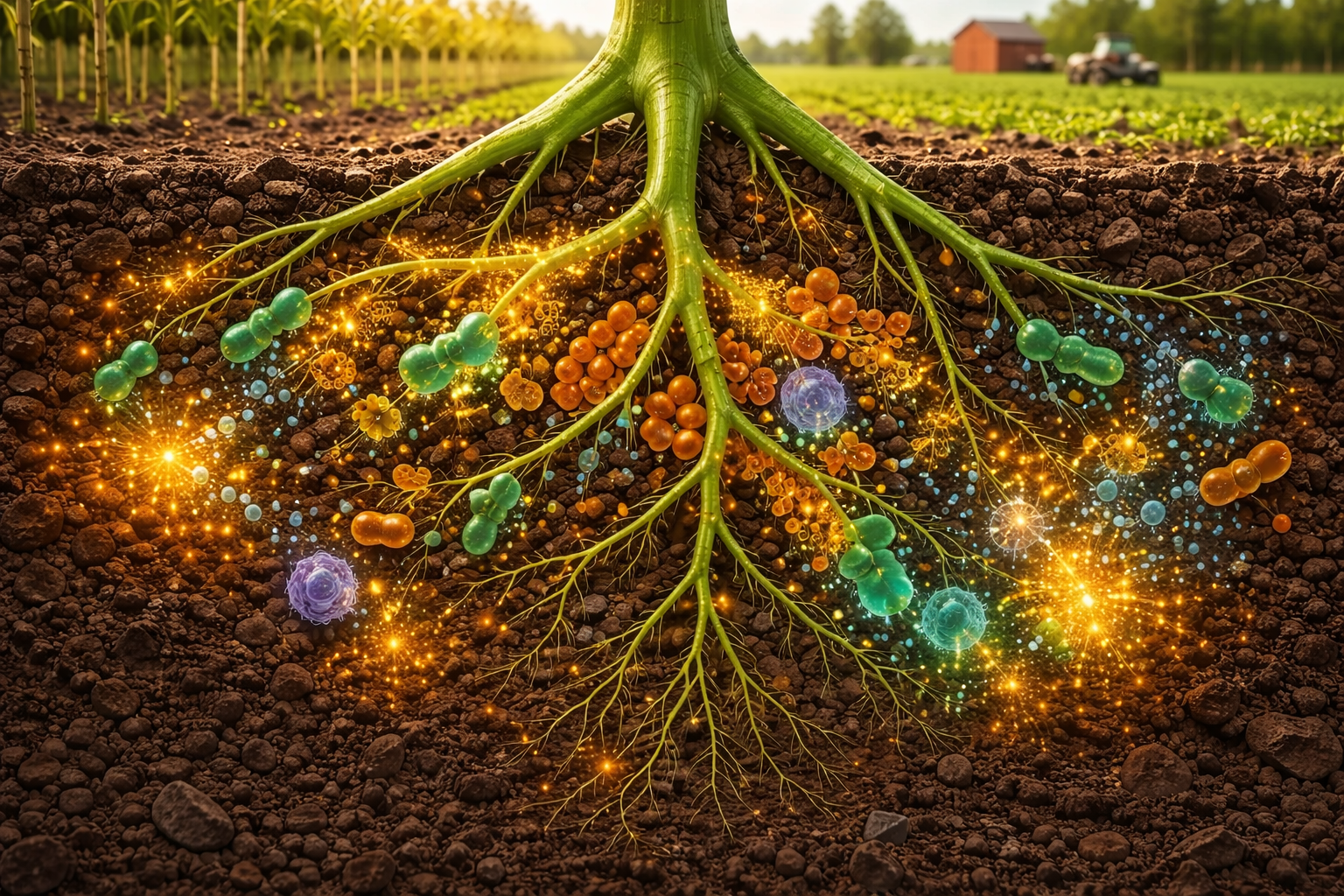
Beneath every productive farm lies a hidden workforce that never rests. Billions of microorganisms, earthworms, and beneficial soil organisms continuously interact to support plant life. While soil may appear lifeless on the surface, it is in fact a dynamic biological system that governs nutrient cycling, disease resistance, and overall crop vitality.
In modern agriculture, where chemical inputs often dominate the conversation, the biological properties of soil are frequently overlooked. Yet, they are the driving force behind sustainable productivity. Without a thriving biological ecosystem, soil gradually loses its fertility, structure, and ability to support healthy crops.
This article explores the critical role of biological properties of soil in crop production and how farmers can harness this living system to improve yields and long-term soil health.
Soil Microorganisms: The Invisible Engine of Fertility
Soil is home to an immense diversity of microorganisms, including bacteria, fungi, actinomycetes, protozoa, and algae. These microscopic organisms perform essential functions that directly impact plant growth.
One of their most important roles is decomposition. Microorganisms break down organic matter such as crop residues, plant roots, and organic amendments into simpler compounds. This process releases essential nutrients like nitrogen, phosphorus, and sulfur into forms that plants can absorb.
Certain beneficial bacteria fix atmospheric nitrogen, converting it into usable forms for plants. Others solubilize phosphorus, making it available from otherwise inaccessible sources in the soil. Fungi, especially mycorrhizal fungi, form symbiotic associations with plant roots, extending their reach and enhancing nutrient and water uptake.
Without these biological processes, soil would quickly become nutrient-deficient, even if fertilizers are applied. Microorganisms ensure that nutrients are continuously recycled and made available to crops.
Earthworms and Soil Fauna: Nature’s Soil Engineers
Beyond microorganisms, larger soil organisms such as earthworms, insects, and arthropods play a vital role in maintaining soil health.
Earthworms are often referred to as “ecosystem engineers” because of their ability to transform soil structure. As they burrow through the soil, they create channels that improve aeration and water infiltration. Their movement helps mix organic matter with mineral soil, enhancing nutrient distribution.
Earthworm castings are rich in nutrients and beneficial microbes, making them highly valuable for plant growth. Additionally, their activity promotes aggregation, which improves soil structure and stability.
Other soil fauna contribute by breaking down organic residues into smaller particles, making it easier for microorganisms to decompose them further. This collaborative system accelerates nutrient cycling and improves soil fertility.
Organic Matter: The Foundation of Soil Life
Organic matter serves as the primary energy source for soil organisms. It includes decomposed plant and animal residues, compost, and other carbon-rich materials.
A soil rich in organic matter supports a diverse and active microbial population. It improves nutrient availability, enhances water retention, and contributes to better soil structure. Organic matter also acts as a buffer, stabilizing soil temperature and pH.
As organic matter decomposes, it forms humus, a stable substance that binds soil particles together and enhances cation exchange capacity. This creates a more resilient soil system capable of sustaining crops under varying environmental conditions.
Maintaining adequate organic matter levels is essential for preserving the biological health of soil.
Nutrient Cycling: Continuous Supply for Plant Growth
Biological activity in soil drives nutrient cycling, a process through which nutrients are continuously converted, released, and reused.
When organic materials decompose, nutrients are mineralized into forms that plants can absorb. At the same time, microorganisms temporarily immobilize nutrients within their biomass, preventing them from being lost through leaching. As these organisms die and decompose, the nutrients are released again.
This cycle ensures a steady and balanced supply of nutrients throughout the crop growth period. It reduces dependency on external inputs and improves nutrient use efficiency.
Efficient nutrient cycling is one of the key benefits of biologically active soils.
Disease Suppression: Nature’s Defense Mechanism
Healthy soil biology plays a crucial role in protecting crops from diseases. Beneficial microorganisms compete with harmful pathogens for space and nutrients, limiting their ability to establish and spread.
Some microbes produce natural antibiotics and enzymes that suppress or destroy disease-causing organisms. Others induce systemic resistance in plants, strengthening their natural defense mechanisms.
In biologically active soils, disease outbreaks are often less severe because the microbial ecosystem maintains a natural balance. In contrast, soils with poor biological activity are more vulnerable to pest and disease problems.
Enhancing soil biology is therefore a powerful strategy for reducing reliance on chemical pesticides.
Root–Microbe Interactions: A Symbiotic Relationship
Plant roots and soil microorganisms share a highly interactive relationship. Roots release exudates, organic compounds that attract and feed beneficial microbes in the surrounding soil zone known as the rhizosphere.
In return, these microbes assist plants by improving nutrient availability, producing growth-promoting substances, and protecting roots from pathogens.
This symbiotic relationship enhances root development, increases nutrient uptake efficiency, and improves overall plant health. Crops grown in biologically active soils often exhibit stronger growth and better stress tolerance.
Practical Strategies to Enhance Soil Biological Properties
Improving soil biology requires consistent and thoughtful management practices. Farmers can adopt several strategies to build and sustain a thriving biological ecosystem.
Adding organic matter regularly through compost, crop residues, and natural formulations provides food for soil organisms. Reducing excessive chemical inputs helps preserve beneficial microbial populations.
Practicing crop rotation and cover cropping introduces diversity into the soil ecosystem, supporting a wider range of organisms. Minimizing soil disturbance through reduced tillage protects microbial habitats and maintains biological activity.
Using biological inputs such as microbial formulations and enzyme-based products can further enhance soil life and accelerate natural processes.
These practices collectively create a favorable environment for soil organisms, leading to improved soil fertility and crop performance.
Why Biological Properties Are the Future of Farming
As agriculture moves toward sustainability, the importance of soil biology continues to grow. Chemical inputs alone cannot maintain long-term soil productivity. It is the biological system within the soil that sustains fertility, supports plant health, and ensures resilience against environmental stress.
By focusing on biological properties, farmers can reduce input costs, improve soil structure, enhance nutrient efficiency, and achieve consistent yields. More importantly, they can build a living soil system that remains productive for generations.
The future of agriculture lies not just in feeding the soil, but in nurturing the life within it.
#SoilBiology #LivingSoil #SoilMicroorganisms #SoilHealth #OrganicMatter #SustainableFarming #CropProductivity #SoilLife #AgriScience #NaturalFarming #HealthySoil #BiologicalFarming