

Transforming Agriculture Through Efficient Irrigation and Responsible Water Use
How smart irrigation systems are shaping a sustainable, resilient and profitable future for agriculture
Water is life for every farmer. Yet, as climate change tightens its grip and water scarcity becomes a global concern, the way we irrigate our crops can either secure our food future or threaten it. The key lies in smarter, more sustainable irrigation systems that make every drop count.
The Heartbeat of Agriculture — Water and Irrigation
Water drives the pulse of every farm, influencing soil health, plant growth and yield. But in today’s world, the challenge is not just about watering crops, it’s about doing it wisely. Sustainable irrigation systems are designed to optimize water use, enhance productivity and protect the environment. They ensure that water reaches the roots, not just the soil surface, minimizing waste and maximizing growth.
Manual Irrigation — The Traditional Start
Manual irrigation, the most basic form, involves watering plants by hand using cans, buckets or hoses. While labor-intensive, it allows precise control and close observation of crops, ideal for small-scale farmers and nurseries. However, it’s impractical for larger farms due to high labor demand and uneven water distribution. Shifting from manual methods to more efficient systems is a crucial step toward sustainability.
Surface Irrigation — Old but Reliable
Surface irrigation, commonly practiced across the world, involves flooding fields or channeling water along furrows. It’s simple and requires minimal equipment. However, without proper leveling, this method can lead to uneven watering, waterlogging, and nutrient loss. Farmers adopting sustainable practices often integrate land grading and organic matter management to improve water absorption and reduce wastage.
Subsurface Irrigation — Watering from Below
Subsurface irrigation delivers water directly to the root zone through buried pipes or drip lines beneath the soil surface. This system minimizes evaporation and runoff, making it ideal for arid regions. It promotes healthy root development, reduces weed growth, and conserves water by targeting where it’s needed most. Although initial setup costs are higher, the long-term savings in water and fertilizer make it a sustainable investment.
Sprinkler Irrigation — Simulating Rainfall
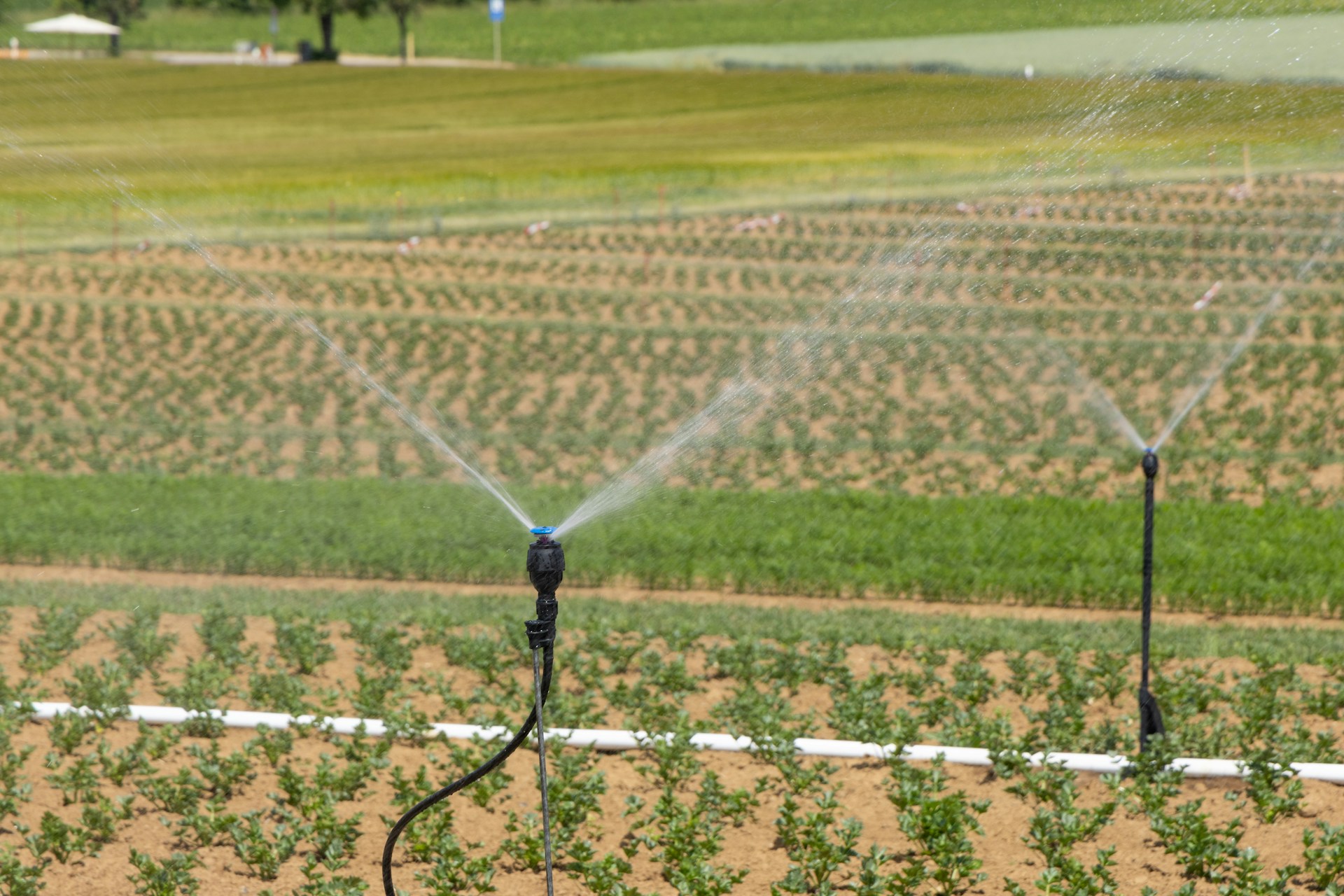
Sprinkler systems distribute water through nozzles that mimic natural rainfall, ensuring uniform coverage. Suitable for diverse crops and soils, sprinklers are efficient, easy to automate and effective for fertigation (applying fertilizers through irrigation). However, farmers should monitor wind speed and water pressure, as these factors affect distribution and efficiency. With solar-powered options now available, sprinklers can be both eco-friendly and cost-effective.
Drip Irrigation — The Gold Standard for Efficiency
Drip irrigation is the hallmark of precision farming. Water is delivered slowly and directly to the plant’s root zone through emitters, drastically reducing evaporation and deep percolation losses. It supports steady plant growth, minimizes disease risk and saves up to 60% more water than traditional methods. Farmers can even integrate nutrient delivery (fertigation), reducing runoff. Though it requires careful maintenance to prevent clogging, drip irrigation is a long-term ally of sustainable agriculture.
Choosing the Right System
The best irrigation method depends on farm size, soil type, crop pattern, water availability and budget. For smallholders, drip or sprinkler systems are excellent for water conservation. Large-scale farms may combine multiple methods, for example, surface irrigation for cereals and drip systems for horticulture. Sustainable farming thrives when technology meets practical understanding of local conditions.
The Sustainable Path Forward
Modern irrigation is not just about delivering water, it’s about nurturing life sustainably. Every efficient system reduces pressure on freshwater sources, enhances soil health and builds resilience against droughts. As farmers adopt solar pumps, moisture sensors and automated controls, the dream of water-smart agriculture becomes a global reality. Sustainable irrigation is not a luxury, it’s the foundation of tomorrow’s food security.
#SustainableFarming #WaterConservation #IrrigationInnovation #DripIrrigation #SprinklerSystem #EcoAgriculture #SmartFarming #SoilHealth #ClimateSmartFarming #FarmersForFuture #OrganicCultivation #EfficientWaterUse