


Your soil Is speaking but are you listening?
How some common weeds reveal the hidden health of soil
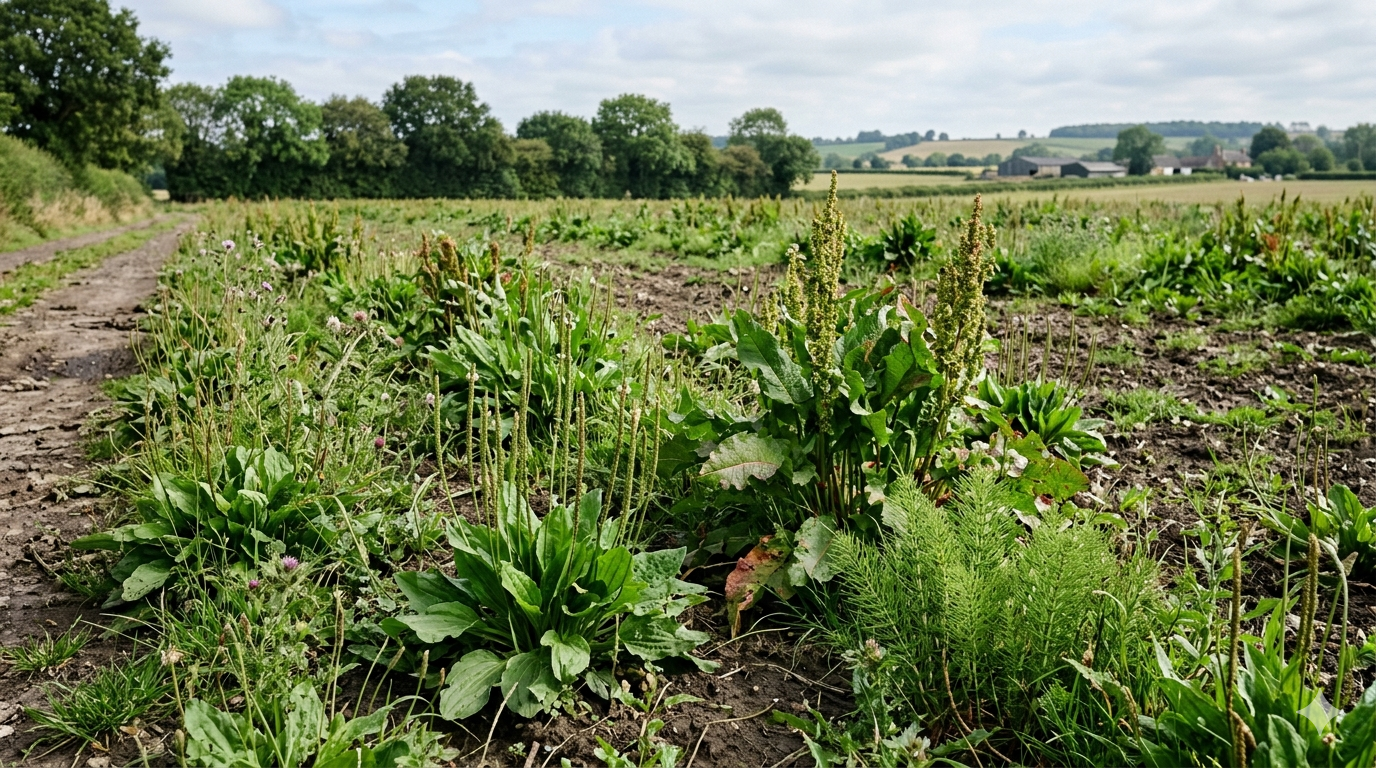
Before you invest in expensive soil tests or fertilizers, take a walk through your field. The answers you’re looking for might already be growing right under your feet quietly, persistently and for free.
The Silent Language of Weeds
Weeds are often seen as enemies in agriculture. However, from an agro-ecological perspective, they are not random invaders they are biological indicators. Each weed species thrives under specific soil conditions, acting as a natural diagnostic tool for soil health, structure, fertility, and imbalances.
If interpreted correctly, weeds can guide farmers toward precise, low-cost soil management strategies especially valuable in chemical-free and regenerative farming systems.
Let’s decode what these common weeds are telling us.
What These Weeds Reveal About The Soil
Curly Dock
When you see curly dock dominating your field, it’s a strong indicator of compacted, poorly aerated, and acidic soil. This weed thrives where root penetration is restricted and drainage is weak. The underlying issue is often heavy machinery use or poor organic matter balance.
Horsetail
Horsetail is a classic sign of waterlogged and acidic conditions. It thrives in soils with poor drainage and low oxygen availability. Its presence often indicates deeper structural problems such as hardpan layers or excessive irrigation.
Broadleaf Plantain
This weed is a reliable indicator of compacted soil. It prefers areas where foot traffic, grazing, or machinery has reduced soil porosity. Compaction limits root growth and microbial activity, affecting overall crop performance.
Lamb’s Quarters
Unlike most weeds, lamb’s quarters is actually a positive indicator. It grows in fertile soils rich in organic matter and nutrients, particularly nitrogen. Its presence suggests that your soil has good biological activity and fertility potential.
Wood Sorrel
Wood sorrel signals acidic soil conditions with low calcium availability. This imbalance can affect nutrient uptake in crops and reduce microbial diversity. It often appears in soils lacking proper mineral balance.
Dandelion
Dandelions thrive in compacted soils that are also deficient in calcium. Interestingly, their deep taproots help break compaction naturally and bring nutrients up from deeper layers making them both a symptom and a partial solution.
Purslane
If purslane is spreading across your land, it’s a sign of dry, disturbed, and often overworked soil. This weed is highly resilient and appears in areas where soil structure has been degraded due to excessive tillage or exposure.
White Clover
White clover indicates low nitrogen levels in the soil. However, it also plays a beneficial role by fixing atmospheric nitrogen. Its presence suggests that your soil is attempting to self-correct nitrogen deficiency.
Chickweed
Chickweed grows in moist, fertile soils with good biological activity. While it can compete with crops, its presence generally indicates a well-balanced soil ecosystem with sufficient moisture and nutrients.
Turning Weed Signals into Action
Understanding weeds is only useful if it leads to actionable decisions. Here’s how you can respond effectively:
- Compacted Soil (Plantain, Dandelion, Curly Dock):
Focus on improving soil structure. Use organic amendments, microbial inputs, and reduce heavy machinery usage. Deep-rooted crops and biological soil conditioners can help restore porosity. - Acidic Soil (Wood Sorrel, Horsetail, Curly Dock):
Work on pH correction using natural calcium sources and biological buffering agents. Enhancing microbial diversity can gradually stabilize pH. - Low Fertility (White Clover):
Incorporate nitrogen-fixing inputs and organic matter. Biological stimulants can accelerate nutrient cycling. - Waterlogged Soil (Horsetail):
Improve drainage through soil structure correction and reduce over-irrigation. Biological solutions that enhance aggregation are highly effective. - Dry & Disturbed Soil (Purslane):
Minimize tillage, increase organic matter, and improve water retention capacity. Mulching and microbial treatments can stabilize such soils. - Fertile Soil Indicators (Chickweed, Lamb’s Quarters):
Maintain this balance. Avoid overuse of inputs and focus on sustaining biological activity.
A Strategic Perspective for Modern Farming
Weeds are not merely problems to eliminate they are indicators to interpret. In chemical-free farming systems, especially those focusing on biological inputs and soil regeneration, weed analysis becomes a powerful diagnostic tool.
By aligning weed observations with targeted soil management practices, farmers can reduce input costs, improve crop health, and build long-term soil resilience.
This approach shifts farming from reactive to proactive where decisions are based on ecological signals rather than external prescriptions.
Final Thought
The next time you see weeds in your field, resist the urge to remove them immediately. Observe them. Understand them. They are not just growing they are communicating.
And if you learn to read them correctly, your soil will never need to “speak” twice.
#SoilHealth #WeedIndicators #NaturalFarming #RegenerativeAgriculture #SoilBiology #SustainableFarming #AgroEcology #ChemicalFreeFarming #FarmSmart #SoilManagement #OrganicFarming